Built for the Cooperative: OEC’s Next Chapter
When Oklahoma Electric Cooperative (OEC), in Norman, Oklahoma, began experiencing rapid growth, its existing headquarters required a renovation to support its expanding team and operational needs. What started as a facility planning study quickly evolved into a comprehensive campus transformation: one designed to support employees, serve members, and position OEC for the future.
In partnership with Geddes Armstrong Construction, our team developed a phased master plan that allowed OEC to remain fully operational throughout construction. On a complex, multi-building campus where functions could not pause, sequencing and collaboration were critical.
Strategic Planning for a Growing Campus
The existing site included four buildings, each presenting unique challenges and opportunities:
- Building One served as the original main building with a strong public presence along a major street.
- Building Two, an aging warehouse at the center of the site, was structurally unsound and required demolition.
- Building Three, the newest office building, offers oversized workspaces ideal for reconfiguration and increased capacity.
- Building Four, the newest warehouse, provided expansion potential but required upgraded fire suppression systems.
Our approach focused on thoughtful renovation, strategic additions, and careful phasing. Early improvements to Building Three created temporary member services and executive spaces, allowing operations to shift seamlessly while Building One underwent major renovations. Simultaneously, an expansion to Building Four began. Once complete, Building Two was demolished and transformed into much-needed yard space.
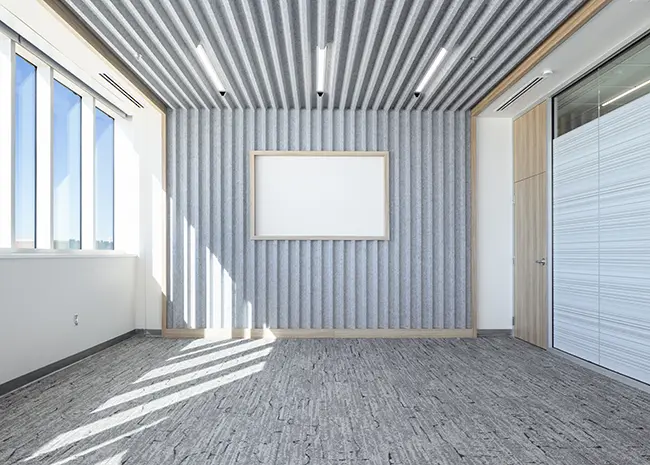
The renovation of Building Three ultimately doubled the size of the boardroom and training room, which enhances OEC’s ability to collaborate, educate, and lead.
Creating a Public Presence
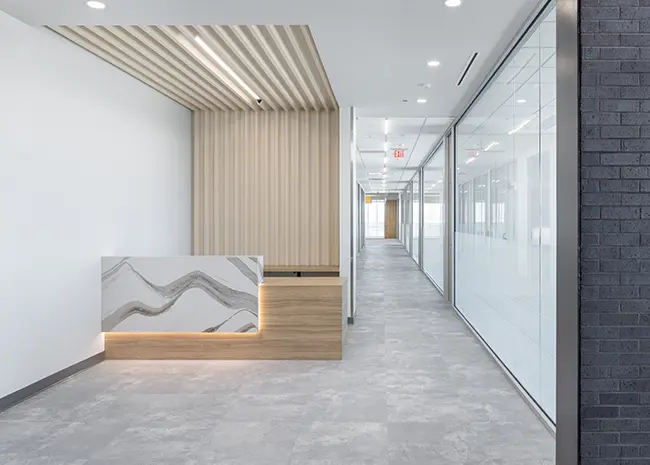
The most transformative work occurred at Building One. A new addition wraps the public-facing side of the building, establishing a bold presence along the major roadway and reinforcing OEC’s identity in the community.
The first floor was designed to visually align with other buildings on campus, creating a sense of cohesion. The building’s overall width was carefully calibrated to maximize daylighting, while the second-floor features floor-to-ceiling glass along its entire exterior. Interior corridors are defined by continuous glass walls, interrupted only by full-height wood doors. Even center offices benefit from daylight through clerestory walls that bring natural light deeper into the plan.
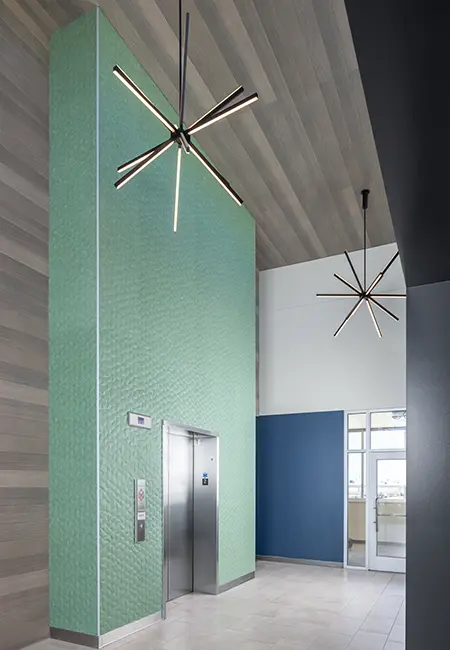
Exterior forms translate seamlessly into the interior, where layered materials reveal depth and craftsmanship. Wood panels are carved away to reveal recessed felt accents, adding texture and warmth. A carefully curated color palette complements OEC’s branding, with green accents serving as intuitive wayfinding elements that guide visitors back to the building’s core.
Designed for People
OEC is an employee-centric organization, and the new headquarters reflects that commitment.
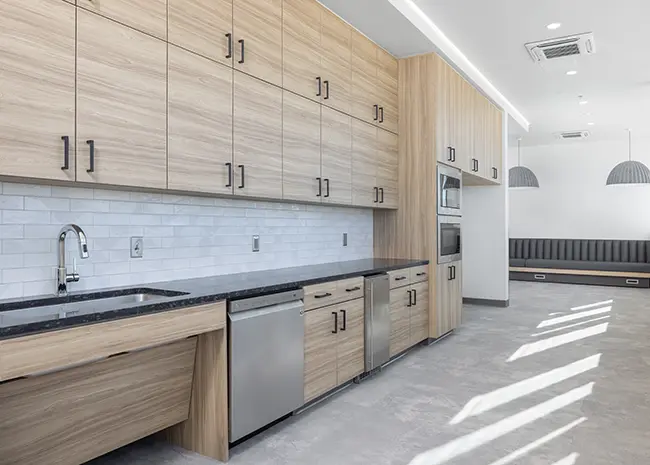
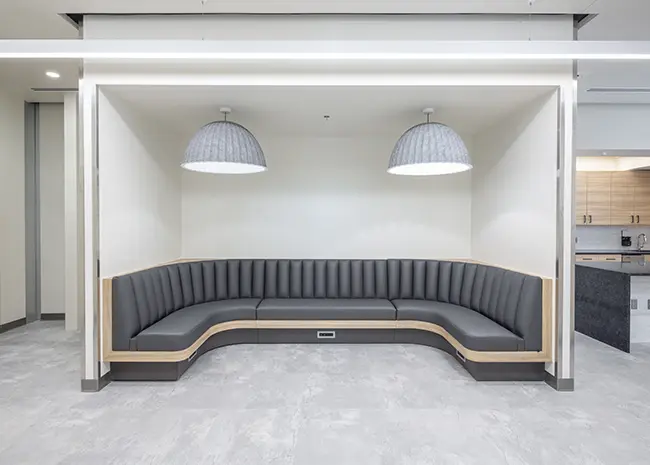
High-quality gathering and break spaces were intentionally designed to encourage rejuvenation and connection. Booth seating areas and larger communal tables provide opportunities for staff to share meals, collaborate, and build community. An existing skylight was repurposed to flood the first-floor breakroom with natural light, reinforcing the emphasis on wellness.
One of the most striking design features lives just outside the executive suite: a custom cowhide rug depicting a partial map of OEC’s service area. The design transitions from floor to wall, evolving into a mural of a lineman atop a transmission pole; a powerful visual tribute to the people of Oklahoma who keep power flowing across the region.
Built for Performance and Resilience
Behind the beauty lies a high-performing facility engineered for resilience.
The Fiber dispatch center, a critical infrastructure that must operate without interruption, was constructed as an ICC 500-rated safe room capable of protecting the entire building during severe weather events.
Remarkably, even after more than doubling the building size, the campus now consumes less overall energy while providing superior comfort and functionality. A Variable Refrigerant Flow (VRF) HVAC system delivers individualized comfort control to each space, empowering users to tailor their environment.
A Campus Ready for the Future
Through strategic planning, phased construction, and intentional design, OEC’s headquarters has evolved into a cohesive, high-performance campus that reflects its mission and momentum.