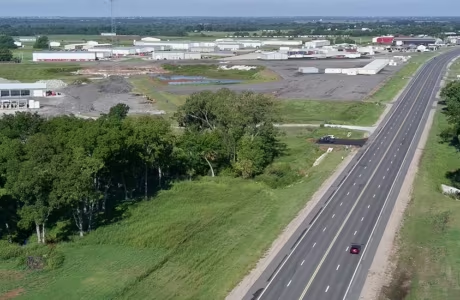
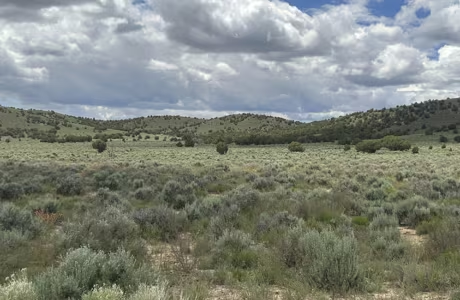
Transportation Engineering That Keeps Projects Moving
Transportation projects are shaped as much by coordination as by engineering. Roadway design decisions influence drainage performance, traffic operations, utility relocation, and environmental approvals. When those factors are addressed early and in coordination, roadway and bridge projects move from concept to construction with fewer surprises.
Guernsey provides transportation engineering services for municipal, county, and state roadway systems, including corridor widening and realignment, bridge replacement, intersection improvements, drainage reconstruction, and highway rehabilitation. Over the past 30 years, our team has completed more than 350 task orders for the Oklahoma Department of Transportation (ODOT) and local governments, delivering roadway and bridge projects that progress efficiently through design, review, and construction.
Using established CADD and ProjectWise workflows and long-standing subconsultant partnerships, Guernsey coordinates roadway engineering, structural design, hydraulics and hydrology, traffic engineering, geotechnical investigations, surveying, and environmental review as a single design effort. This integrated approach helps agencies reduce redesign, maintain project schedules, and deliver transportation infrastructure that performs as intended in the field.
350+
Transportation task orders delivered for ODOT and local agencies
30+
Years supporting ODOT and municipal roadway programs
Legacy
Engineering roots tied to Oklahoma roadway design prior to ODOT’s formation
Nearly 100
years of civil engineering experience across infrastructure systems
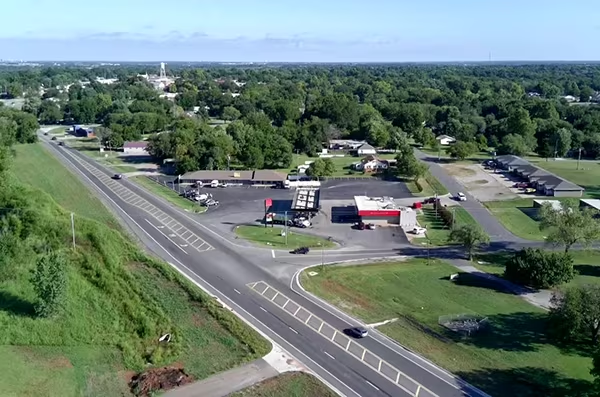
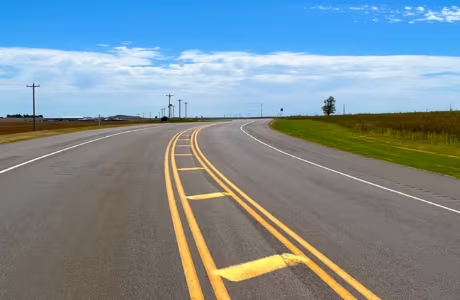
ODOT corridor widening project with improved shoulders and drainage structures designed by Guernsey.
Roadway and Bridge Design Grounded in Real Conditions
Transportation design must respond to the constraints of the corridor itself. Existing alignments, drainage patterns, utilities, adjacent development, and traffic volumes all shape the engineering solution.
Typical corridor constraints include:
- Existing roadway alignment and drainage patterns
- Underground utilities and adjacent development
- Traffic volumes that must remain operational
- Aging bridges or outdated roadway geometry
Guernsey’s transportation engineers design roadway improvements ranging from rural highway widening and resurfacing projects to complex urban corridors with heavy utilities and adjacent development. Assignments frequently include corridor realignments, bridge replacements, intersection improvements, and pavement rehabilitation.
Maintaining traffic during construction is often the defining constraint. Phased construction strategies, temporary detours, and shoo-fly alignments allow improvements to proceed while preserving mobility along critical corridors.
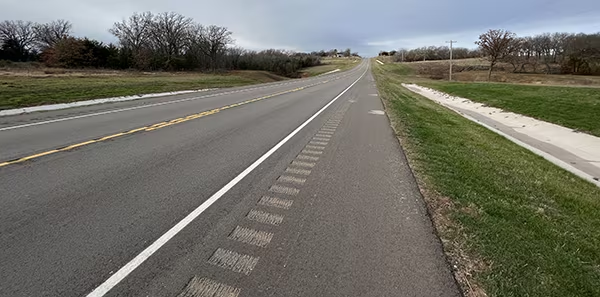
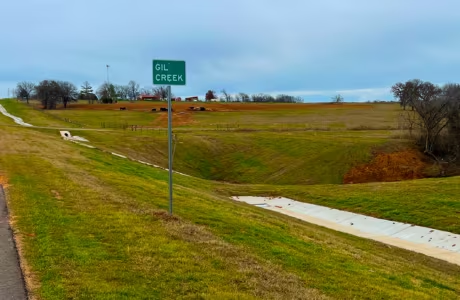
Rural highway drainage ditch reconstruction designed by Guernsey.
Corridor Drainage and Hydraulic Engineering
Drainage performance is often the hidden driver of roadway deterioration and safety issues. Undersized cross-drain structures, ineffective stormwater systems, and poor subgrade drainage can lead to flooding, pavement failure, and long-term maintenance problems.
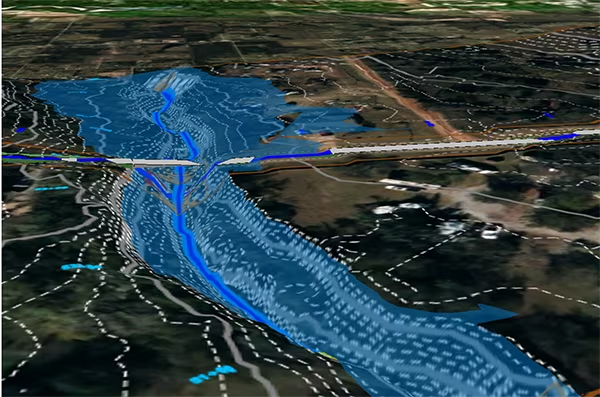
Guernsey routinely performs hydraulics and hydrology analyses to evaluate existing drainage conditions and identify deficiencies. Corridor-wide hydraulic studies may evaluate dozens of cross-drain structures to determine which require replacement or extension to meet design storm criteria. In urban environments, storm sewer systems and curb-and-gutter infrastructure are incorporated to improve drainage performance and roadway durability.
Drainage improvements are coordinated with roadway grading, bridge structures, and utility considerations to ensure the final design performs as intended once constructed.
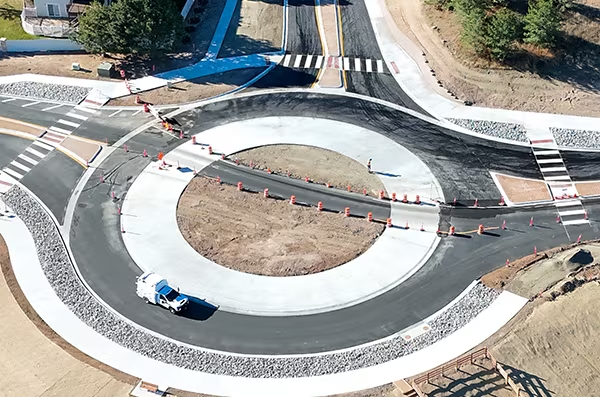
Guernsey’s roundabout design provides for continuous traffic flow safeguarding motorists and pedestrians.
Intersection and Traffic Safety Improvements
Transportation improvements often focus on high-interest intersections where crash history or operational deficiencies require careful evaluation.
Guernsey’s traffic engineering work includes analyzing crash data, evaluating intersection operations, and developing alternative configurations that improve safety and traffic flow. Depending on the corridor context, solutions may include signal improvements, restricted crossing U-turn configurations, median U-turn treatments, roundabouts, or targeted alignment adjustments.
By pairing roadway design with operational analysis, agencies can address safety concerns while preserving corridor efficiency and minimizing unnecessary geometric changes.
Interchange and Highway Rehabilitation
In addition to corridor improvements, Guernsey supports interchange and highway rehabilitation projects where pavement deterioration, drainage failures, and outdated safety features require reconstruction.
These assignments often involve evaluating pavement structure alternatives, improving subbase drainage through edge drain systems, and developing traffic control strategies that allow phased construction without compromising highway throughput. Designs are coordinated with existing right-of-way conditions and utility infrastructure to avoid unnecessary relocations whenever possible.
Multidisciplinary Transportation Engineering
Effective transportation projects depend on early coordination between disciplines. Guernsey’s transportation engineers work alongside surveyors, geotechnical specialists, hydrologists, traffic engineers, and environmental professionals as a single integrated team.
This structure allows engineering decisions made during early design to account for downstream implications in permitting, utility coordination, and construction sequencing. Our familiarity with ODOT processes, Circuit Engineering Districts, and local agency review procedures helps keep projects aligned with approval requirements from the outset.
Transportation Engineering Capabilities
Guernsey’s transportation engineers support roadway and bridge infrastructure across a wide range of project types. Our experience includes corridor reconstruction, bridge replacement, drainage improvements, intersection redesign, and highway rehabilitation projects requiring coordinated engineering and environmental analysis.
Guernsey provides a full range of transportation engineering services for municipal, county, and state roadway systems.
Roadway and Corridor Design
- Highway widening and realignment
- Rural and urban roadway reconstruction and pavement rehabilitation
- Grade–drain–surface improvements
- Bridge and approaches widening and replacement
Traffic Engineering and Safety Analysis
- Intersection operations analysis
- Crash data evaluation and safety improvements
- Alternative intersection configurations including RCUT, J-turn, and roundabout concepts
- Signing, striping, and traffic control design
Drainage and Hydraulic Design
- Corridor-wide hydraulic analysis
- Cross-drain structure evaluation and replacement
- Storm sewer system design for urban corridors
- Subsurface drainage and edge-drain systems
Transportation Construction Support
- Construction staging coordination
- Phased traffic control plans
- Temporary detours and shoo-fly alignments
- Utility coordination and relocation support
- PS&E development for bidding and construction
Roadway Design
Deliverables are prepared in accordance with ODOT standards and produced through established digital workflows, including ProjectWise coordination when required.
- Project management
- Land and aerial surveying
- Drafting and plan preparation
- County roadway design
- County bridge design and structural engineering
- Geotechnical investigations for roadway and bridge design
- Hydraulics and hydrology studies and reports
- Traffic engineering and traffic studies
- Utility relocation coordination and inspection
- Socio-economic studies
- Non-FHWA environmental reconnaissance
- Federal NEPA studies
- Quality control and quality assurance
A Coordinated Approach to Transportation Infrastructure
Transportation projects succeed when the engineering team operates as a coordinated unit. Clear leadership, consistent quality control, and open communication help identify potential issues early—before they affect schedules, constructability, or cost.
Guernsey serves as the central point of coordination for each assignment, managing engineering disciplines and subconsultants through established communication channels. Our long-standing partner network understands its role within the project team, allowing technical issues to be resolved efficiently and reducing the likelihood of change orders during construction.
The result is transportation infrastructure that performs as intended: safer corridors, durable pavement systems, reliable drainage, and roadway designs that support the needs of communities and the agencies responsible for maintaining them.
Contact Us Today!FAQs
Transportation engineering firms plan and design roadway, bridge, drainage, and traffic systems, coordinating engineering disciplines to deliver projects from concept through construction.
At the earliest planning stage. Early coordination reduces redesign, aligns permitting and utilities, and improves project schedules.
Corridor widening, roadway reconstruction, bridge replacement, intersection improvements, drainage systems, and highway rehabilitation.
Through phased construction, detours, and temporary alignments that maintain traffic flow while improvements are built.
Poor drainage leads to pavement failure, flooding, and long-term maintenance issues. Hydraulic design is often a primary performance driver.
Municipalities, counties, and state agencies, including long-term work with ODOT and local governments.