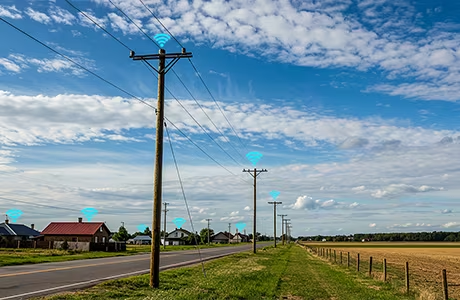
Projects Don’t Stall in Design. They Stall in Environmental.
Environmental decisions determine whether projects move forward or stop.
- Crews encounter protected resources mid-construction
- Federal funding triggers requirements for which no one planned
- Agencies enter late and reset schedules
- Permitting delays cascade into cost, risk, and lost momentum
The first environmental decision sets the trajectory for the entire project.
Get it right, and the project moves.
Get it wrong, and everything slows down.
- Regulatory Strategy and Environmental Clearance
- Broadband Environmental Services
- Transportation and DOT Environmental Services
- Environmental Compliance and Risk Management

When in doubt, treat wildlife as protected. Do not move wildlife to “make it safer” and do not finish quickly and report later.
What Environmental Delays Actually Look Like
Environmental stoppages are not measured in weeks.
- 6–12 months for basic federal clearance
- 12+ months for environmental assessments
- Up to 2 years for complex environmental review
Miss the timing, and projects stall.
Most delays are not caused by complexity. They are caused by late engagement.
When Environmental Requirements Apply
Environmental requirements are not optional. They are triggered by how a project is funded, located, and permitted.
Environmental review is typically required when:
- Federal funding is used (grants, BEAD, RUS, etc.)
- A project crosses federal or tribal land
- A federal permit is required (such as a Section 404 permit)
- Work may impact wetlands, waterways, or protected species
- Cultural or historic resources may be affected
If any of these conditions exist, environmental review is part of the project.
Who Is Responsible?
Responsibility is shared; but accountability sits with the project owner.Owner / Client
- Ultimately responsible for compliance
- Carries funding, schedule, and regulatory risk
- Must ensure environmental requirements are addressed
Engineer / Design Team
- Integrates environmental into design and routing
- Coordinates with environmental specialists
- Supports permitting and technical documentation
Environmental Team
- Identifies what is triggered and when
- Leads regulatory strategy and agency coordination
- Prepares documentation and manages the approval process
Where Projects Go Wrong
Environmental is often assumed to be:- “handled by someone else”
- “a later phase task”
That assumption leads to:
- late discovery of requirements
- schedule resets
- redesign and added cost
- risks are still manageable
- routes can still change
- approvals can align with the schedule
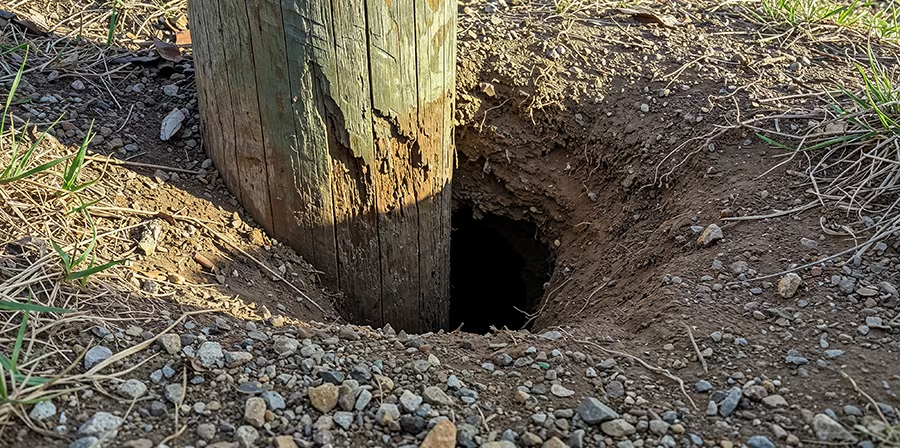
Burrows at pole sites are one of the stop work triggers utility crews need to know. Stop work. Secure the area. Contact environmental lead and document the location.
Environmental Risk Is Project Risk
Environmental issues rarely appear as “environmental problems.” They show up as:
- Schedule delays
- Redesign and rework
- Field stoppages
- Compliance exposure
Crews are often forced to make decisions in real time. Those decisions carry legal, operational, and reputational consequences.
Most of it is avoidable.
The pattern is consistent: Environmental is brought in too late.
Pattern
- Environmental issues are introduced after design has started.
- Permitting pathways are unclear.
- Agencies and stakeholders are engaged too late.
Decision
- Define the environmental pathway at project start.
- Align agencies, permitting, and Tribal coordination before design advances.
- Run environmental in parallel with engineering.
Result
- Requirements are clear early.
- Coordination aligns with the schedule.
- Projects move forward without avoidable delays.
Proven Across Agencies, Utilities, and Infrastructure Systems
450+
Environmental task orders delivered
30+ years
Supporting ODOT and local government programs
10+
Sequential on-demand contracts for one statewide client
24+ years
NEPA leadership experience guiding delivery
Regulatory Timeframes Managed
- 6–12 months for categorical exclusions
- 12+ months for environmental assessments
- Up to 2 years for complex environmental impact statements
Repeatable Project Types
- Statewide DOT programs: roadway and bridge improvements across multiple counties
- Electric utility and cooperative infrastructure: transmission systems, construction work plans, broadband-related projects
- Federal and Tribal-influenced projects requiring NEPA and multi-agency coordination
Scope Delivered on Every Project
- NEPA documentation: CatEx, EA, and EIS
- Environmental studies: biological, cultural, and hazardous materials
- Coordination: federal, state, Tribal, and public stakeholders
- Permitting, including USACE 404 coordination
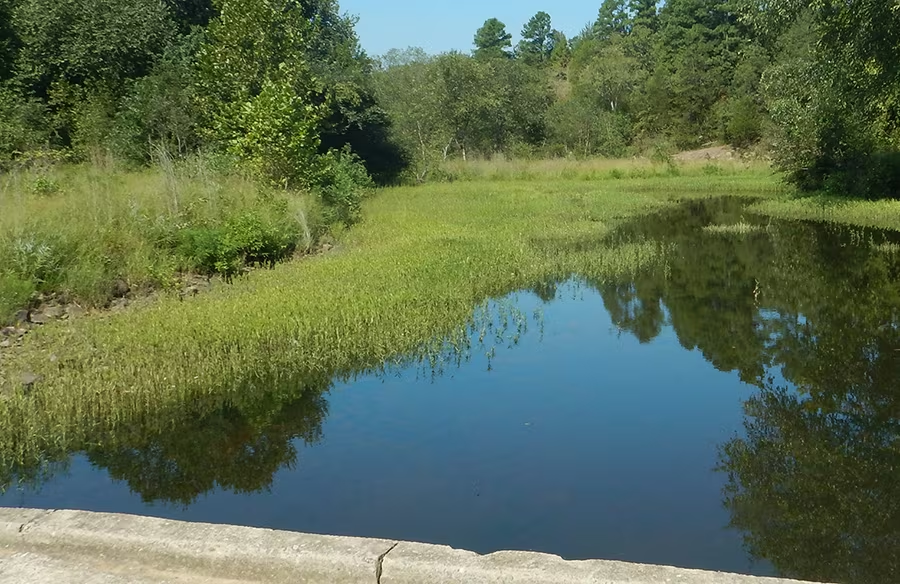
Guernsey Environmental Services delivers clear, defensible environmental documentation, anticipates coordination needs, and keeps projects moving with disciplined communication and responsive execution.
What Clients Gain
- Fewer delays because environmental coordination starts early
- Defensible decisions that withstand agency and stakeholder review
- Alignment across engineering, environmental, and regulatory teams
- Predictable schedules in complex, multi-agency environments
- Reduced redesign because constraints are defined before design advances
Most firms respond to environmental requirements. Guernsey defines them early so projects move.
DOT On-Demand Contracts
Continuous environmental delivery across statewide programs with repeat task orders under active schedules.
Electric Cooperative Infrastructure
SPCC and NEPA environmental compliance aligned with active utility operations and federal funding requirements.
Federal/Tribal Coordination Projects
Multi-agency and Tribal consultation managed early to prevent late-stage redesign.
We Keep Projects Moving
Guernsey aligns environmental requirements with project delivery so work progresses without avoidable delays.
We do not operate downstream.
We work alongside engineering, planning, and program management to remove obstacles before they appear.
Environmental is not a phase. It is part of how projects get delivered.
- Work stops
- Agencies require additional studies or redesign
- Permitting resets project schedules
- Funding timelines are missed
- Violations create legal and financial exposure
These are not edge cases. They are common outcomes of late environmental involvement.
The work spans headquarters, utility campuses, fleet environments, secure installations, and public operations. Each sector demands a different balance of performance, compliance, circulation, systems integration, and durability. Environmental requirements show up differently depending on the project. These are the areas where Guernsey delivers the most impact.
NEPA and Environmental Clearance
Getting Projects Approved and Moving
Many projects require environmental review before they can move forward. When federal funding, permits, or land are involved, that process is governed by NEPA.
What NEPA Requires
NEPA applies when federal funding, permits, or land are involved. It requires federal agencies to evaluate environmental impacts before a project can move forward.
Projects are cleared through one of three pathways:
- Categorical Exclusion (CatEx): Confirms the project has no significant impacts and can proceed without detailed analysis
- Environmental Assessment (EA): Evaluates potential impacts and typically results in a Finding of No Significant Impact (FONSI)
- Environmental Impact Statement (EIS): Required for complex projects with significant impacts, including detailed analysis, public involvement, and a Record of Decision (ROD)
Each pathway defines scope, coordination, and schedule.
- NEPA Documentation: Categorical Exclusions, Environmental Assessments, Environmental Impact Statements
- Section 106 (Cultural Resources) and Section 7 (Endangered Species) coordination
- Federal, state, and tribal agency engagement
- Permitting strategy aligned with project schedules
Broadband Environmental Services
Without Environmental Clearance, Broadband Projects Do Not Move
Broadband expansion is driven by funding. Delivery is controlled by environmental clearance.
Federal broadband programs introduce layered regulatory requirements that must be resolved before construction begins. Projects funded through NTIA programs, including BEAD, Middle Mile, Tribal Broadband, and Digital Equity initiatives, are subject to:
- NEPA (National Environmental Policy Act)
- NHPA (National Historic Preservation Act)
- ESA (Endangered Species Act)
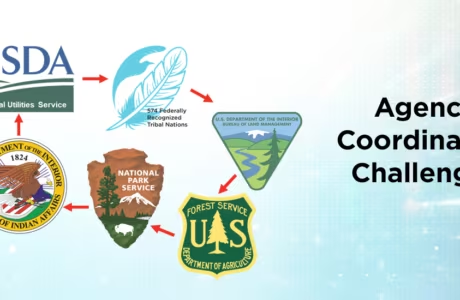
In addition, agencies such as RUS, BLM, USFS, BIA, NPS, and Tribal Nations may have jurisdiction, each with its own review process, coordination requirements, and approval timelines.
Multiple agencies often have overlapping authority, which is where timelines expand and projects stall if coordination is not defined early.
- NEPA, NHPA, and ESA compliance tied to federal funding
- Tribal and agency coordination to prevent delays
- Alignment with BEAD reimbursement and deployment timelines
- Hardened dispatch centers and IT rooms
- Route validation to avoid redesign and rework
SPCC and Environmental Compliance
Preventing Violations. Protecting Operations.
Guernsey has supported electric cooperatives, utilities, and industrial clients across hundreds of SPCC plans and updates.
SPCC plans are required under EPA regulations for facilities that store oil above defined thresholds and are designed to prevent discharges from reaching navigable waters, stormwater systems, and public water supplies.
Facilities that store oil above regulatory thresholds are required to maintain SPCC plans to prevent spills from impacting regulated water systems.
- SPCC plan development and updates
- Facility evaluations and applicability review
- Coordination with regulatory agencies
- Support during EPA inspections
- Facilities prepared for inspection
- Reduced risk of violations and penalties
- Compliance aligned with real-world operations
Transportation and DOT Environmental Services
Built for How DOT Projects Actually Move
Guernsey supports transportation projects both as part of integrated teams and alongside other engineering firms. We understand how environmental fits into transportation delivery. That reduces friction with design teams and agencies.- Environmental assessments and clearances for roadway and bridge projects
- Cultural, biological, and water resource evaluations
- Public involvement and stakeholder coordination
- On-demand environmental contracts supporting ongoing DOT programs
Environmental Compliance and Risk Management
Managing Ongoing Environmental Obligations
Environmental services extend beyond project approvals. They protect operations and reduce long-term exposure.- Phase I, II, and III Environmental Site Assessments
- Stormwater management and compliance
- Hazardous materials and waste management
- Environmental audits and compliance programs
Rural Electric Co-ops Are Uniquely Positioned to Deliver Broadband
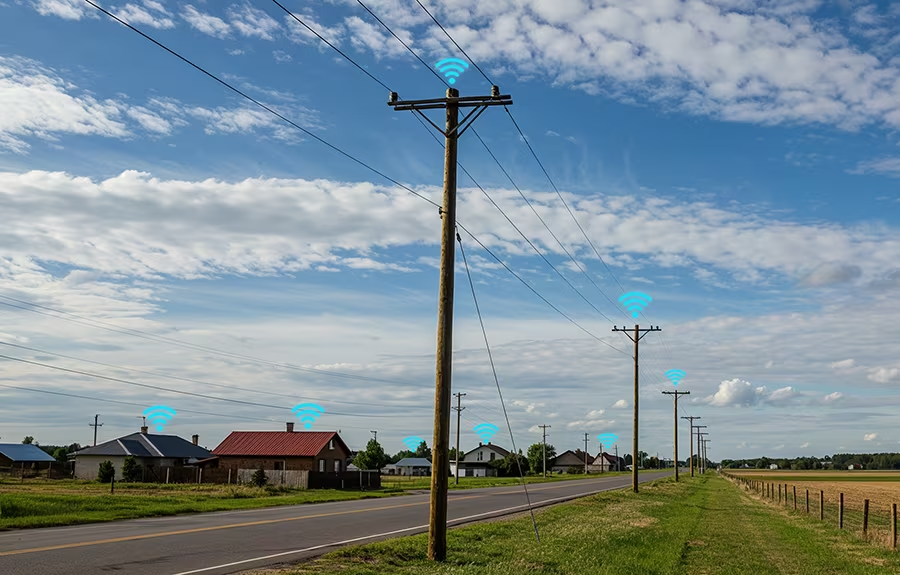
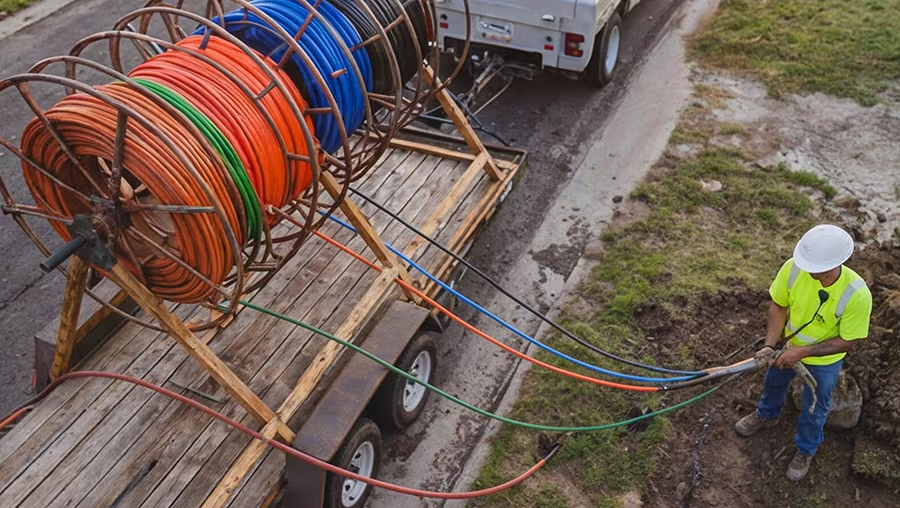
Guernsey helps coops navigate federal broadband funding environmental compliance requirements for middle-mile broadband expansion challenges.
Early, Integrated, and Coordinated
The difference between a smooth project and a stalled one is when environmental is brought in.
A good rule of thumb: Start environmental at or before 30 percent design. Bring all stakeholders to the table early.
Our Approach
- Engage Early: Identify triggers, stakeholders, and risks before design advances
- Align with Engineering: Run environmental in parallel with design, not after it
- Coordinate Agencies: Manage communication across federal, state, and tribal entities
- Document Clearly: Deliver defensible, review-ready environmental documentation
- Protect the Schedule: Keep projects moving from planning through construction
Start Environmental Before It Becomes a Problem
Environmental delays don’t happen because requirements are ignored. They happen because they are identified too late. If environmental is not already part of your project strategy, it will eventually control your schedule.
Bring Environmental in Early
If environmental is not part of your project strategy, it will control your schedule.
FAQs
Environmental review is typically required when a project involves federal funding, federal permits, or potential impacts to natural or cultural resources.
Common triggers include:
Federal funding (BEAD, RUS, grants, etc.)
Crossing federal or tribal land
Section 404 permits or other federal approvals
Impacts to wetlands, waterways, or protected species
Cultural or historic resource considerations
If any of these apply, environmental review is part of the project.
NEPA (National Environmental Policy Act) requires federal agencies to evaluate the environmental impact of projects they fund, permit, or approve.
NEPA typically applies when:
Federal funding is involved
A federal permit is required
A project occurs on federal land
The level of review varies:
Categorical Exclusion (lower complexity)
Environmental Assessment
Environmental Impact Statement (most complex)
Each level affects schedule, coordination, and documentation requirements.
Environmental timelines vary based on project complexity and regulatory requirements:
6–12 months for basic federal clearance
12+ months for environmental assessments
Up to 2 years for complex environmental review
Timelines increase when:
Agencies are brought in late
Field studies are required
Coordination across multiple entities is needed
Early planning is the most effective way to reduce delays.
Responsibility is shared, but accountability rests with the project owner.
Owner / Client: Responsible for compliance, funding, and schedule risk
Engineer / Design Team: Integrates environmental into design and permitting
Environmental Team: Leads strategy, coordination, and documentation
Environmental issues often arise when responsibility is unclear or delayed.
Yes. Environmental requirements are one of the most common causes of project delays.
Delays occur when:
Requirements are identified late
Agencies require additional coordination or study
Permits are not aligned with design schedules
Field conditions trigger stop-work decisions
Most delays are preventable with early environmental involvement.
Broadband projects funded with federal dollars must meet environmental requirements before construction begins.
Environmental clearance affects:
Project timelines
Funding eligibility and reimbursement
Route approval and constructability
Without environmental clearance, broadband projects cannot move forward regardless of funding.
Environmental should be engaged during early planning or at the latest by 30% design.
Bringing environmental in early allows:
Risk identification before design is finalized
Coordination with agencies before permitting
Alignment with funding and construction schedules
Late involvement leads to redesign, delays, and increased cost.