Engineering for Infrastructure That Has to Work
Infrastructure projects carry real operational risk. Building systems must perform, schedules must hold, and many facilities must remain operational during construction.
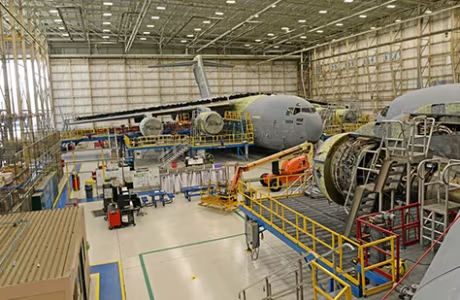
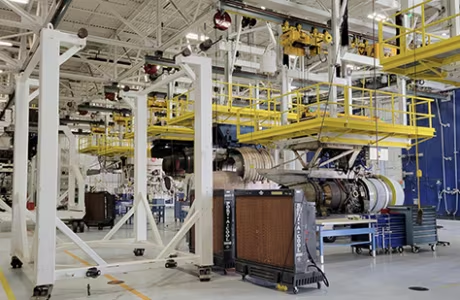
Guernsey provides electrical, mechanical, site/civil, structural, and power engineering for complex facilities and infrastructure. Our engineers support federal agencies, aerospace environments, electric cooperatives, municipalities, universities, and commercial organizations that depend on reliable systems and disciplined execution.
With nearly 100 years of engineering experience, we help clients move projects forward through responsive communication, coordinated design, and dependable technical expertise from early planning through construction-phase services.
Download Engineering Services Flyer- Performance under operational constraint
- Integrated technical coordination
- Responsive communication
- Dependable delivery from planning through construction
Why Clients Bring Guernsey In
Engineering challenges rarely stay within one discipline. Systems intersect, infrastructure must be upgraded within occupied facilities, and projects often move forward under strict regulatory requirements.
Guernsey’s multidisciplinary engineering team addresses those conditions directly. Electrical, mechanical, structural, civil, and power systems are coordinated to produce practical solutions that support real operations.
Clients rely on Guernsey for:
- Deep engineering experience across building systems and infrastructure
- Strong coordination between engineering disciplines
- Clear communication and responsive technical support
- Regulatory fluency and code-compliant design
- Consistent execution from early planning through construction
Our team operates as an extension of the client organization, helping manage risk, maintain operations, and move projects forward with confidence.
Repeatable Work Across Agencies and Infrastructure Systems
Firm Foundation
97 Years
Engineering experience
What this proves
Sustained, recent delivery across federal, state, municipal, and institutional clients—not legacy experience or isolated projects.
Where this applies
- Federal and DoD facilities
- Aerospace and aviation environments
- Utility and cooperative infrastructure
- Municipal and institutional facilities
Engineering for Complex Operating Environments
Guernsey supports clients across facility and infrastructure environments where reliability, coordination, and operational continuity matter.
Federal and Government Facilities
Engineering for secure facilities, operational buildings, training environments, and specialized infrastructure upgrades where coordination and compliance are critical.
Aerospace and Research Environments
Engineering support for aerospace and research facilities where building systems must perform reliably and projects often move forward within active operations.
Electric Cooperative Infrastructure
Engineering for utility and cooperative environments that depend on dependable systems, coordinated planning, and infrastructure that supports ongoing operations.
Commercial and Institutional Facilities
Engineering for commercial, municipal, and institutional projects where building systems, site conditions, and project delivery must align with real operational needs.
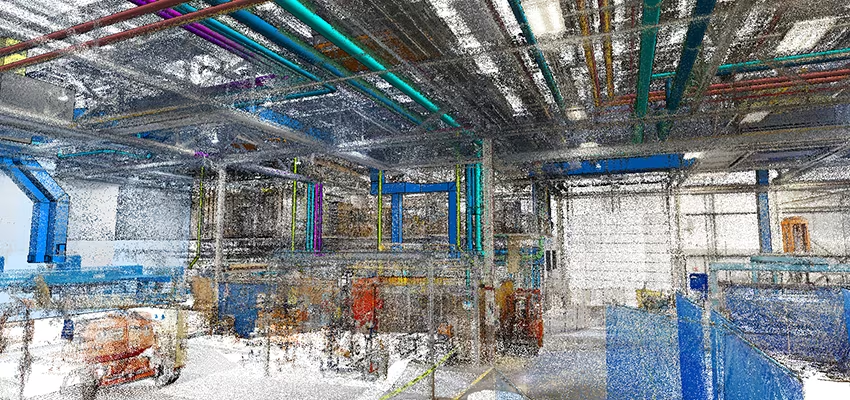
LiDAR scanning captures precise spatial data, providing accurate site and facility information that supports engineering analysis, design coordination, and documentation.
LiDAR, Survey, and Design Coordination
Accurate engineering starts with accurate field information. LiDAR and geospatial documentation improve coordination by giving teams reliable existing conditions data before design decisions are locked in.
That precision supports analysis, reduces uncertainty, and helps engineering teams coordinate site, structural, and building system decisions with better information from the outset.
Integrated Architecture and Engineering
Many facility and infrastructure projects require architecture and engineering disciplines to work in close coordination. When systems are designed in isolation, conflicts appear later in construction, schedules slip, and costs increase.
Guernsey’s integrated teams align architectural design, engineering systems, and construction planning from the beginning. This approach improves coordination, reduces project risk, and helps clients maintain operations while projects move forward.
Integrated teams commonly support
- Facility assessments and existing conditions documentation
- Renovation and facility modernization planning
- Construction phasing and operational continuity strategies
- Code compliance and building system coordination
- Construction-phase coordination including RFIs, submittals, and site observations
In select programs, Guernsey serves as owner’s engineer, providing oversight from concept through construction, coordinating decisions across disciplines, stakeholders, and project phases to maintain alignment and reduce execution risk.
What This Enables
Coordinated engineering is not just about design. It determines how projects move forward, how risk is managed, and how systems perform over time.
Fewer Redesign Cycles
Alignment between disciplines early reduces conflicts that typically surface during construction.Better System Decisions
Engineering analysis, modeling, and coordination support decisions before systems are locked into design.Reduced Project Risk
Code compliance, constructability, and operational constraints are addressed before they become schedule or budget issues.Continuity from Planning to Construction
Decisions made early are carried through design and construction without loss of intent or coordination.Disciplines coordinated for complex facilities and infrastructure
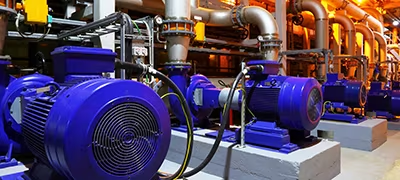
Electrical Engineering
Electrical systems must support reliability, safety, and operational continuity. Guernsey provides electrical engineering for building systems, specialized facilities, and infrastructure upgrades. Engineering analysis supports system decisions before design is finalized, including load flow, fault conditions, and lifecycle performance.
Key services
- Power distribution design including switchgear, panels, and feeders
- Lighting design with controls and photometric analysis
- Emergency and backup power systems including generators and UPS
- Low-voltage systems including fire alarms, security, and communications
- Arc-flash and short-circuit analysis
- Compliance with NEC, NFPA 70/72/110, and IEEE standards
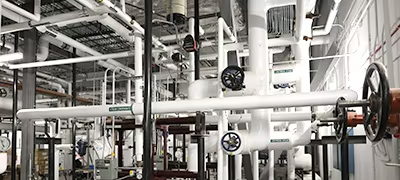
Mechanical Engineering
Mechanical systems directly affect facility performance, efficiency, and occupant comfort. Guernsey engineers HVAC, plumbing, and ventilation systems designed to meet operational requirements and support long-term performance. Modeling and system evaluation inform decisions early, helping clients understand performance, cost, and long-term operational impact before systems are selected.
Key services
- HVAC system design including boilers, chillers, and controls
- Energy-efficient upgrades and ventilation optimization
- Plumbing systems including domestic water, sanitary waste, and storm systems
- Fire protection integration and coordination
- Energy modeling and life-cycle cost analysis
- Compliance with ASHRAE, ICC, UFC, and NFPA standards
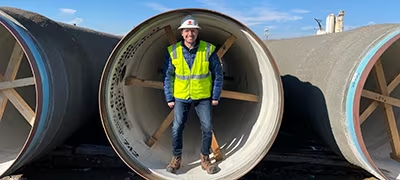
Site/Civil Engineering
Site and infrastructure decisions affect drainage, accessibility, permitting, and long-term facility performance. Guernsey provides site and civil engineering that supports both project delivery and ongoing operations. Work spans municipal, state, federal, and private infrastructure systems, from site development and drainage to full public works coordination.
Key services
- Site layout and 3D surface creation for grading models
- Drainage and utility infrastructure design
- Detention, retention, storm sewer, sanitary sewer, and water line design with DEQ permitting
- Stormwater modeling and permitting including SWPPP and NPDES
- Roadway and parking design with ADA compliance
- Permitting support, agency coordination, and field services
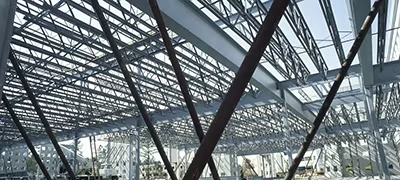
Structural Engineering
Structural engineering must balance safety, constructability, and long-term performance. Guernsey provides structural engineering for new construction, facility modernization, and infrastructure upgrades. Structural systems are evaluated for full load conditions, including gravity, wind, seismic, and progressive collapse requirements.
Key services
- Structural design in steel, concrete, wood, and masonry
- Structural retrofits, load evaluations, and seismic analysis
- Structural engineering for new construction and facility renovations
- Experience with ICC-500 and FEMA shelters
- Code compliance with IBC, ASCE 7, and local building codes
- PS&E packages and construction-phase services including RFIs, submittals, and site observations
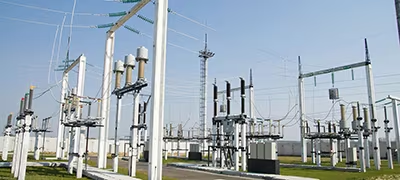
Power Engineering
Guernsey supports electric cooperatives with practical engineering services that strengthen grid reliability and support long-term infrastructure planning.
Key services
- Construction work plans and long-range planning studies
- Sectionalizing studies and arc-flash analysis
- Staking, inspection, and work order inspections
- Overhead and underground plans and specifications
- Utility relocations
- Disaster recovery and mitigation

Transportation Engineering
Guernsey’s transportation engineers support roadway and bridge infrastructure across a range of project types.
Key services
- Roadway widening and realignment
- Pavement rehabilitation and grade-drain-surface improvements
- Drainage and hydraulic design
- Traffic engineering and safety analysis
- Transportation construction support
Coordinated Engineering for Demanding Operational Conditions
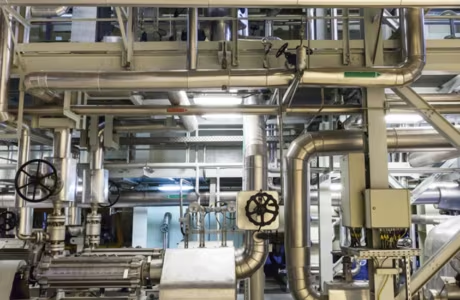
Guernsey’s engineering work spans facilities and infrastructure where building systems must perform reliably under demanding operational conditions.
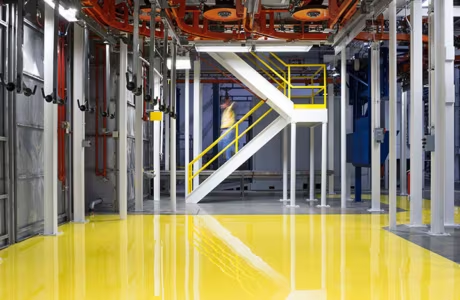
Engineering support for the Renovation of the System Training Building at the Mike Monroney Aeronautical Center required coordinated upgrades to laboratories, classrooms, and building systems while the federal training facility remained operational.
Contact Us Today!FAQs
Organizations typically engage engineering support when planning facility upgrades, infrastructure improvements, or new construction projects that involve building systems, utilities, or regulatory requirements. Early involvement helps identify system constraints, coordinate disciplines, and reduce risk before design decisions are finalized.
Yes. Many engineering projects occur within occupied or operational facilities. These projects require careful coordination, phased construction planning, and system upgrades that maintain continuity while improvements are implemented.
Projects involving building system upgrades, infrastructure modernization, or complex facilities often require coordination between electrical, mechanical, structural, and civil engineering. Multidisciplinary engineering helps ensure systems work together and reduces conflicts during construction.
Guernsey provides engineering services for federal facilities, aerospace environments, electric cooperative infrastructure, and commercial and institutional buildings. These environments require reliable systems, coordinated design, and compliance with regulatory standards.
Engineering services often include system evaluation, planning, design development, code compliance, coordination across disciplines, and construction-phase support such as RFIs, submittals, and site observations.
Engineering decisions affect system reliability, maintenance requirements, energy performance, and long-term infrastructure costs. Coordinated engineering helps ensure systems perform as intended over the life of the facility.